Voices
It’s A Numbers Game: Following Analytics For The Win 




We’re all gathering data all the time, but do you know how to harness it? For our summer seminar hosted by Playtime New York in partnership with Earnshaw’s Kids, a panel of experts and practitioners explored just that; discussing how they use data analytics to make better decisions for their businesses.
Moderated by market insider and owner of the boutique Babesta, Jennifer Cattaui, the seminar featured a tech expert, a retailer, and two brands of different sizes who shared actionable insights with all those in attendance on the last day of the show. In case you missed it, Jennifer has gathered them once again to dive deeper into the subject. Let’s pass the mic to her!
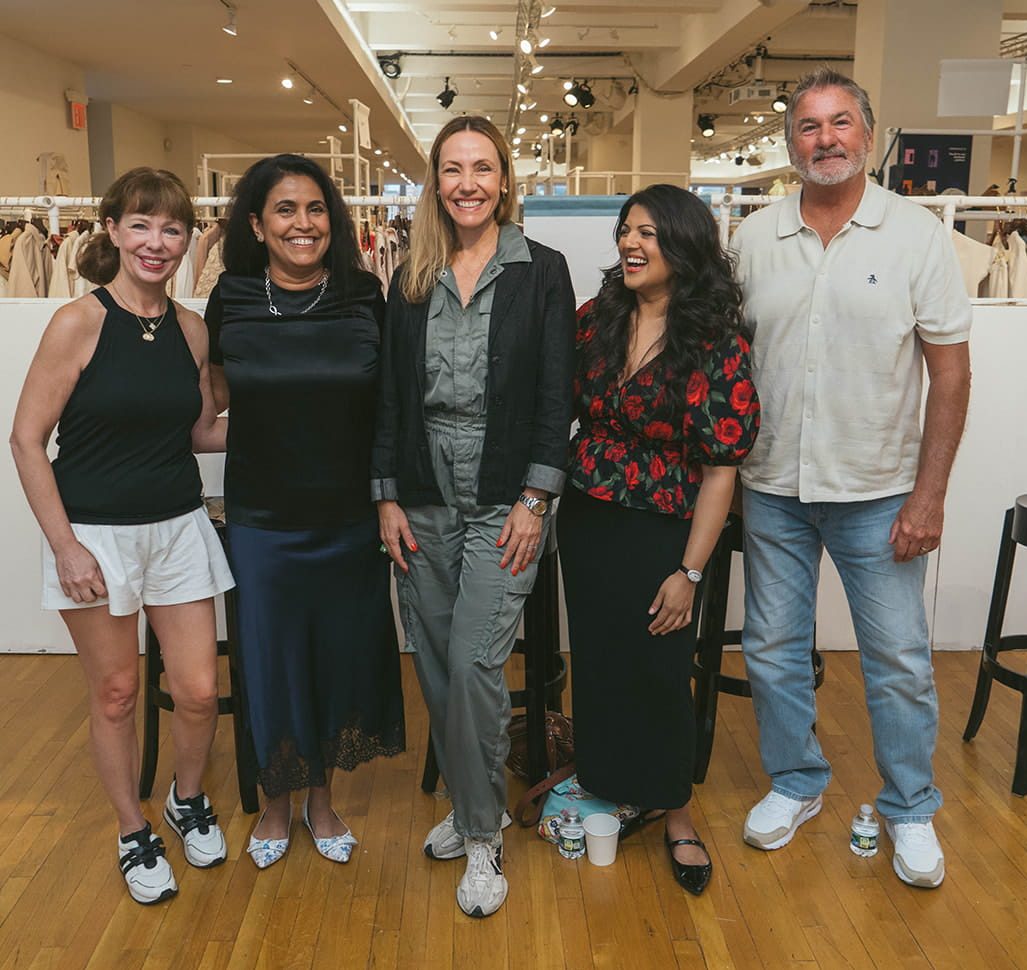 Jennifer (Babesta), Ginger, Penelope (Smoochie Baby), Sumaira (MoonFare), and Kevin (Rylee + Cru). Photo by Nafisa Skeie.
So. Many. Dashboards. Whether you’re a brand or a retailer, there’s one thing for sure: you’re swimming in analytics. You’ve got your Google Analytics for your website, tracking how many people are coming to your site, where they’re landing, and how long they stay. You have your Meta analytics spilling the tea as to which Instagram Reels are ripe for a boost. For your email and SMS campaigns, your Klaviyo, Privy, or Beehiv analytics are sitting pretty on the screen eager to help you attribute revenue and identify your most valuable audience segments. And we cannot forget about your backend system’s analytics – for many in the childrenswear business, that’s Shopify – which is tracking your customers’ purchases, popular inventory items, and daily sales.
And this is just the tip of the iceberg. Every new program, app, and plug-in you’ve got offers up a new suite of metrics, updating in real time.
With all these numbers, it’s easy to get a case of analysis paralysis and turn away. But let us assure you, it’s time to lean in. That’s because once you learn to use these numbers in your day to day tasks, this unique, first-party data can become your superpower.
To start your data-driven journey, you must first determine what numbers you’re going to follow. According to Sabrina Ahmed, founder of MoonFare, a luxury snack tote company known for turning iconic fashion silhouettes into playful, functional snack bags for kids, there are “vanity metrics” and metrics that move the needle.
Rather than focusing solely on followers, likes, or impressions, Ahmed and her team look closely at customer behavior and first-party data to inform business decisions. “We’ve been focusing mostly on sales, understanding who we’re selling to, and customer-focused metrics like return rates and repeat purchases,” she says. Not only are they tracking their site analytics and optimizing pages their clients click on, but they’re also reaching out directly to past clients with surveys as to what they would like to see next from the brand.
These metrics have helped them cater better to their customer base – parents as well as the gift-giving grandparents, aunts, and friends who’ve been frequenting the site. In fact, they even changed up their color mix after learning that although the Chanel 2.55 quilted bag is iconic in black, its silicone snack tote equivalent is best-loved in brights.
 MoonFare (photo by Nafisa Skeie)
The team at MoonFare is also using those same first-party insights to expand beyond their original children’s snack totes: Thanks to feedback from past clients, they’re now launching the Eclipse Carryall, a fashion-forward festival-ready bag designed to extend the MoonFare aesthetic into a broader lifestyle offering and create opportunities for coordinated parent-and-me styling. Ahmed credits her professional career in pharmaceuticals for her instinct to build the business around customer data (MoonFare is her passion project). “In pharma we’re constantly segmenting data to understand different markets, customers, and behaviors,” she says. “It was natural for me to bring that same data-driven mindset to MoonFare.”
Kevin Murray, President of popular childrenswear company Rylee + Cru, says his team is scaling with data too – just a different kind. Where MoonFare leans heavily on customer data, Rylee + Cru’s growth comes down to product data: what’s selling, what’s not, and why. “The biggest game-changing thing we’ve done over the last couple seasons is retooling how we model our forecasting for future inventory,” he shares. With only two times a year to place factory purchase orders which will determine the company’s sales volume for the year, the stakes are high to get it right.
“The moment we have the most inventory in our warehouse we start tracking the velocity of sales on a daily basis,” he says, adding, “we also analyze all product categories.” According to Murray, this analysis has helped them adjust quantities upward of MVP sizes in their factory orders. “We always sell out of size 2/3 and 4/5 before anything else and sometimes so fast. We found we were leaving a lot of potential revenue on the table because we didn’t have inventory.”
 Rylee + Cru
Penelope Stipanovich, founder of Brooklyn-based multi-brand retailer Smoochie Baby, says their data analysis also focuses on products, namely the boutique’s top brands, which she defines as those that make up 3% of overall revenue or more. “Then we look at specific boy styles and SKUs and girl styles and SKUs that were bestsellers for that season,” in order to inform buying for the following season.
Stipanovich says she learned the importance of being data driven the hard way. For nearly 20 years, she’d successfully used her intuition to land on just which labels, sizes, and quantities her customers would snap up, but then her luck ran out. “Three years ago we were left with a ton of inventory at the end of the season,” she shares, admitting she’d been overenthusiastic about the wealth of chidlrenswear offerings at the time. “We really overbought. It was a problem.”
Stipanovich immediately started watching YouTube videos about buying strategies, and engaged an expert to help her put a data-driven plan in place. The experience has been business-changing, she says. “It gave us ownership of what we were doing and allowed us to make projections. We wanted to grow by seven percent last year and could plan exactly how we were going to do it. We even surprised ourselves by surpassing that goal.”
Rylee + Cru’s Murray notes that activating your data is best done if your tech ecosystem is integrated. When they started a little over a decade ago, none of their systems were connected, but over the years they’ve changed up their tech stack with the goal of centralizing their data, and more recently ensuring it was AI-friendly. Even though, he admits, changing systems isn’t easy, the payoff is big.
“We’re seeing a lot of benefits of centralizing data in an ERP system that connects all of the various aspects of the company, and is integrated with Claude,” Murray shared, noting that their use of AI at the company is to supercharge their team, not replace headcount. “If I want to know how a certain ditsy print sold across the SKUs during a particular time period, in seconds I can have that answer.”
AI may just be the secret to unlocking your data’s potential. Ginger Dhaliwal, technologist and consultant (and former founder of Tiny Ginger Showroom) notes that the data’s always been there, but now we not only have easy ways to extract it but also to activate it. She nods to the rise of AI agents (basically more advanced automated workflows) as one of the biggest levers that can help brands and retailers take action with the data they’re collecting.
“Imagine a retailer who is spending $10,000 on paid media but conversion isn’t happening,” Dhaliwal says – a sign, in her view, that something in the marketing funnel is broken. Pinpointing exactly where has traditionally meant hours of manual digging through the data. Agents, she says, can now do that work automatically; tracing the customer’s path from clicking a post to checking out, and flagging exactly where it breaks down.
“Now you can say to Claude, help me create a workflow that looks at all of my channels and ensures that it’s converting for me,” Dhaliwal asserts. “If you do simple things like that, your numbers will go up.”
Of course when you’re making data-driven decisions, one thing is key: your data must be correct. Making sure you know where numbers are being pulled from and that your process is set up to feed these fields correctly is imperative for your data’s integrity.
Rylee + Cru’s Murray recalled a time they had some customer retention numbers that seemed off. Instead of running to make a strategy to address a dip in retention, they dug further, adhering to the adage ‘trust but verify,’ and found the data itself was flawed. This is not to say they’re spending undue time cross checking numbers — Murray noted that “we’re more about speed of decisions rather than getting it perfect” — but questioning the data saved weeks’ worth of unnecessary rework.
 The panelists at the seminar, Playtime New York S26. Photo by Nafisa Skeie.
According to Murray, if you want to start automating your data reports, it’s best to take a lay of the land first. “We started by having everyone chart what they do each day for thirty days,” he shares. “Then we looked at what repetitive tasks technology could help us be more efficient at.” Dhaliwal points out that these repetitive tasks (like data extraction) are the prime candidates for AI agent workflows.
Stipanovich agrees. “Once you learn how to pull those reports out of Shopify it’s worth using AI to take the reports and every week give top sellers, top colors, best sizes, and whatever other information you want to pull – it will do it for you.”
But before you give these instructions, you need to make sure the AI understands your company well, warns Dhaliwal. “When you’re working with ChatGPT, Claude, and other LLMs, you need to remember that they don’t have the context of your business. You need to teach it about your company and who your customers are so it can understand what you do.” Make sure it knows your voice, your brand’s unique point of difference, your competitors, and your core competencies, she suggests.
At the end of the day, you’re choosing the most important metrics, tracking them at a regular cadence, and, when you see trends start to develop, determining an action to take to move those numbers in the direction you want. Also, don’t think you need to take action immediately. Instead, look for trends in the data.
“We don’t always let go of a brand because of a new piece of data. We give it a little more time in the stores until there’s a clear answer from a pattern,” Stipanovich says. And, she reminds, “Don’t hesitate to get outside help.” Doing so worked for her and it can for you: as they say, a little tech teamwork can go a long way!
Thank you to Jennifer and these experts for sharing further insights into data analytics! The full seminar can be (re)watched on our Instagram here.
If you’re looking for a platform to centralize your data, be sure to check out our B2B partner platform, OrderWizz. Designed for both brands and buyers, the platform offers tools for gathering your orders, data analytics, and improving your business. Buyers can click here to create a free account, while brands can book a demo here.